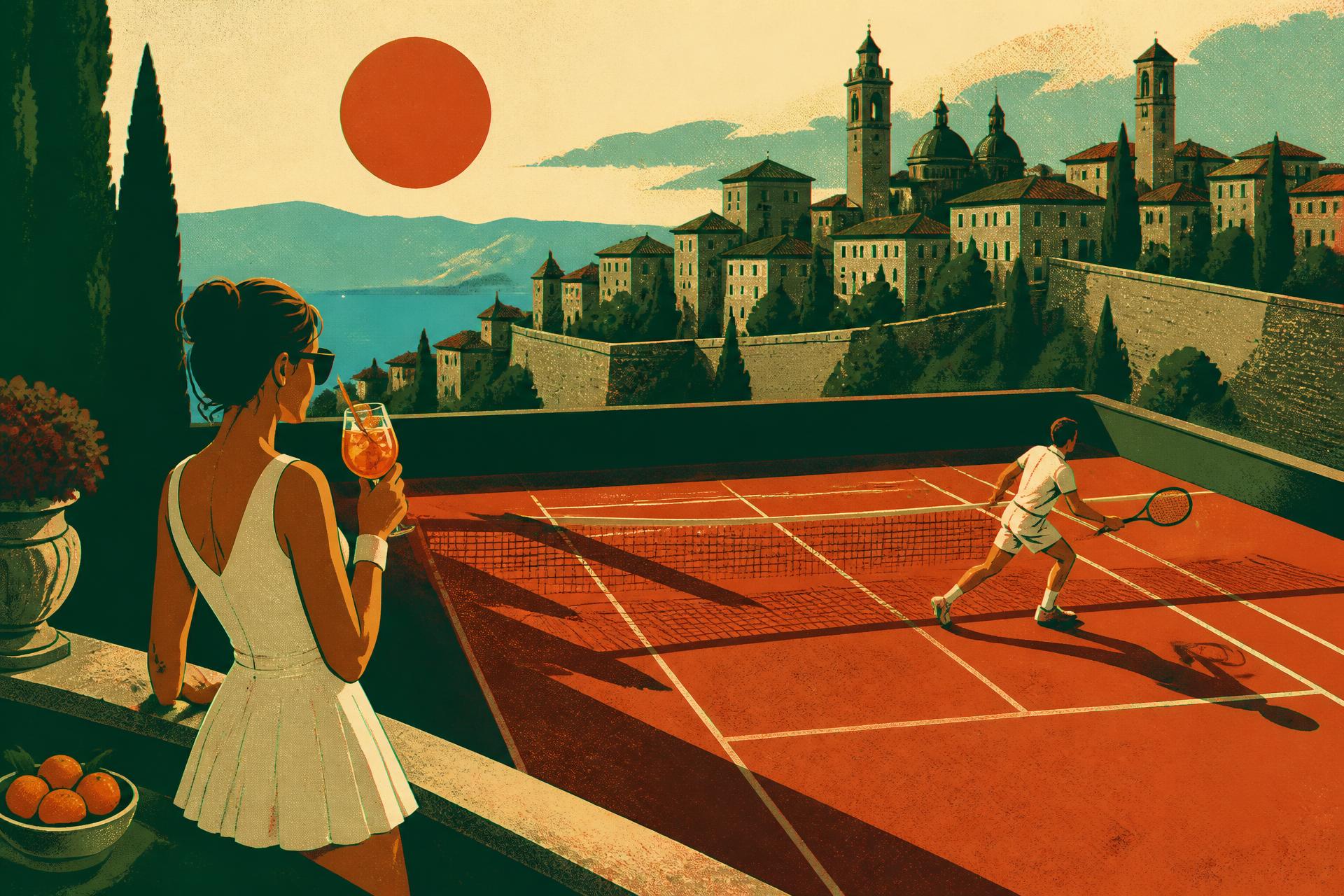
From the archive, 1974
Tennis
The early club played on clay above the city, in whites, badly, and at length. Those courts are long gone; the tennis survives as an attitude, a vocabulary and a great many photographs nobody has catalogued.
The club takes its name from Bartolomeo Colleoni, born around 1400 at Solza in the territory of Bergamo, and the most formidable condottiero Lombardy ever produced. His father was murdered by kinsmen when Bartolomeo was a boy; he left home with nothing and made his name with a lance.
He fought for Venice, then for Milan, then for Venice again — the ordinary arithmetic of the age — and was twice imprisoned for it, once for two years in the castle at Monza. In 1455 the Republic of Venice named him Captain-General of its armies, the highest command it had to give, and he held it until his death at Malpaga in 1475.
He left his fortune to the city: the Cappella Colleoni beside Santa Maria Maggiore in Città Alta, built as his own tomb and still the finest thing in Bergamo, and a bequest for the poor that outlived him by centuries. Verrocchio's bronze of him still rides through a square in Venice. His arms carried three rounded charges; our crest reads them as three clay-coloured tennis balls, a liberty we intend to keep taking.
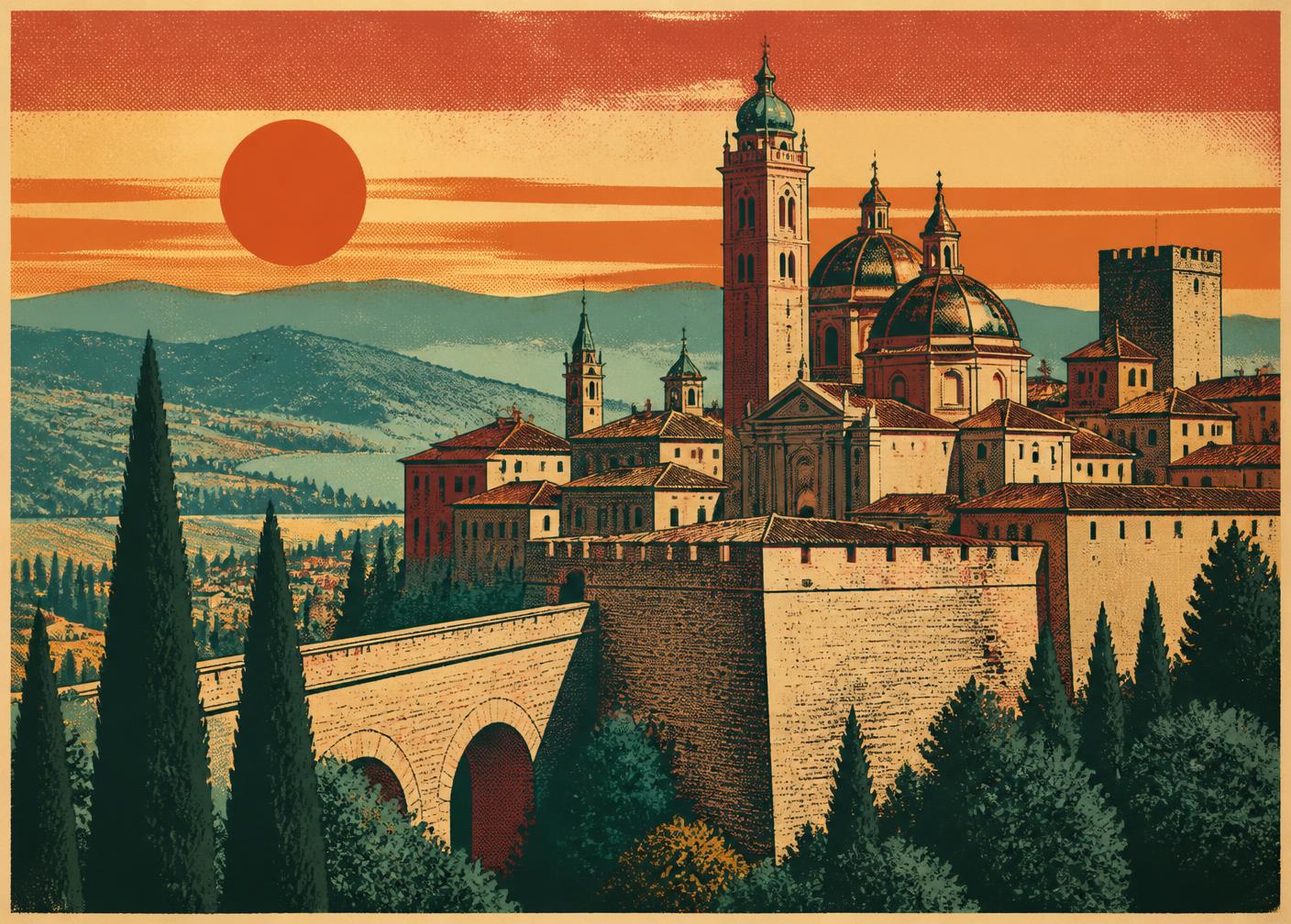
Città Alta, from the archive
La dolce vita is not a yacht. It is the first espresso of the morning taken standing at the counter, said little about. It is the shutters opened onto warm stone. It is a candle lit before anyone arrives, because the evening deserved it.
We make very few things, and only the ones we would want ourselves: coffee roasted dark and unhurried for that first cup, and candles hand-poured in small number, built from sea salt, orchid, eucalyptus and crushed garden herbs — the air of an Italian afternoon, kept indoors.
Get a taste of La Dolce Vita di Italia by visiting our shop.
The club is founded above Città Alta, with one unreliable kitchen.
The first annual Colleoni Cup is held.
The cinema programme begins.
An incident occurs. The papers concerning it remain sealed by the committee.
Women are finally permitted to chair the wine committee, having effectively run it for several decades.
The club celebrates its fiftieth anniversary, by post.
The club keeps no premises. It lives in its journal, its editions and the people who carry its name.
From the archive, 1974
The early club played on clay above the city, in whites, badly, and at length. Those courts are long gone; the tennis survives as an attitude, a vocabulary and a great many photographs nobody has catalogued.
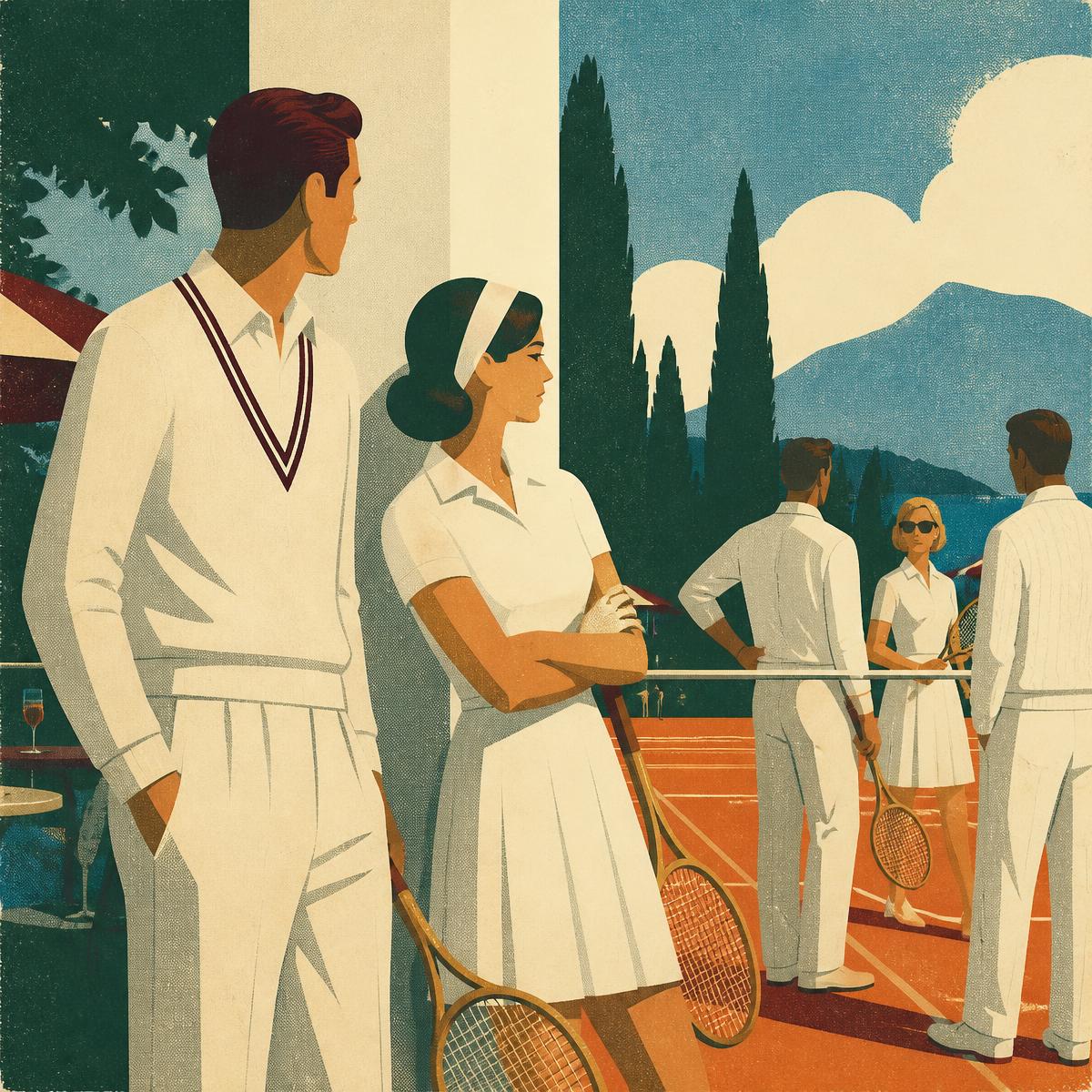
Members, first season
What the club owns today is paper: match books, menus, ticket stubs, letters of complaint and several thousand negatives. Members receive it in instalments, through the Bollettino.
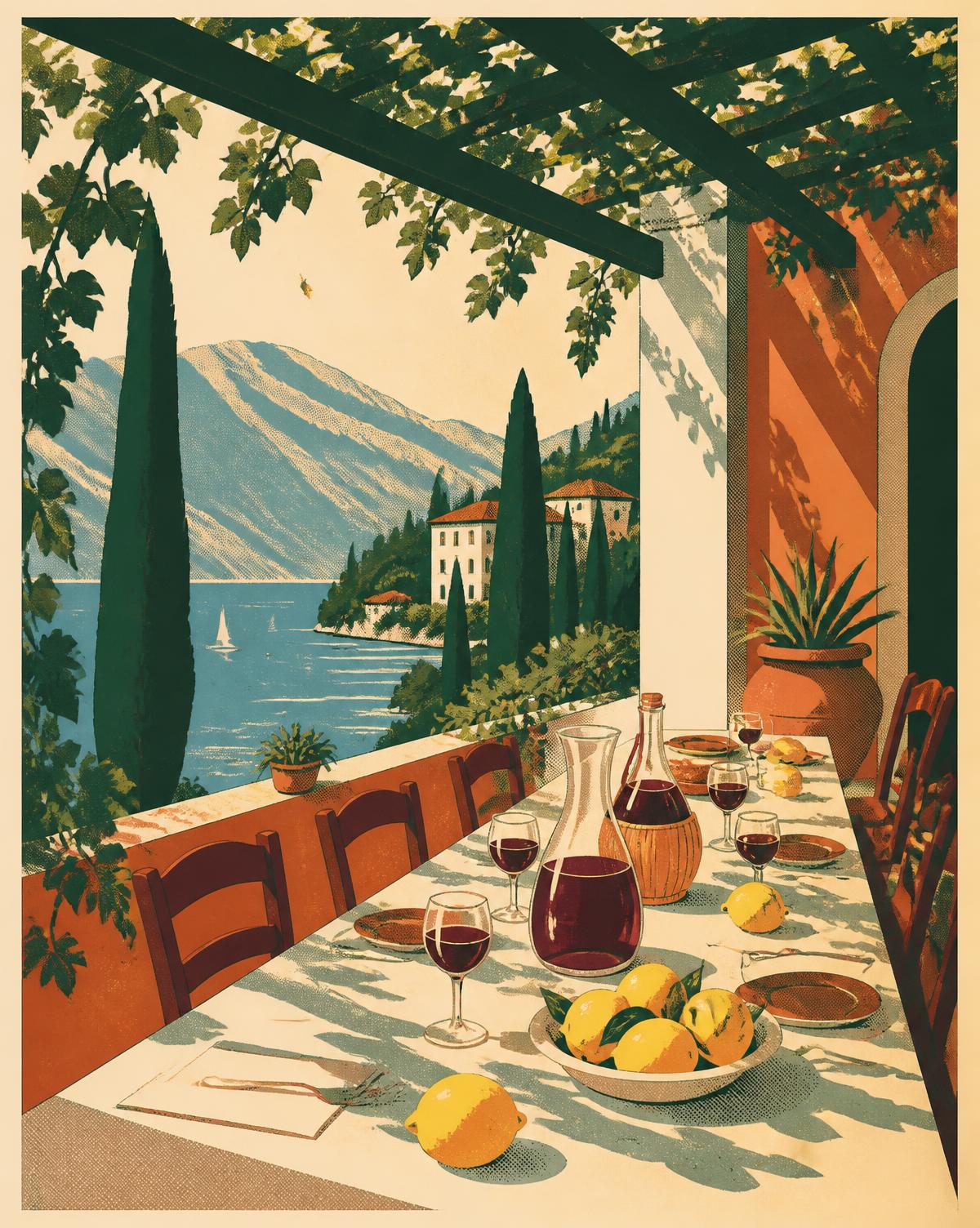
A members’ lunch, undated
The club has never run a restaurant. It has only ever assembled tables — in other people’s rooms, at other people’s hours — and finished later than intended.
The programme, since 1978
Sofia Riva’s programme began with a borrowed projector and two hundred folding chairs. It continues as a list: films proposed by members, argued over in print, and occasionally watched together.
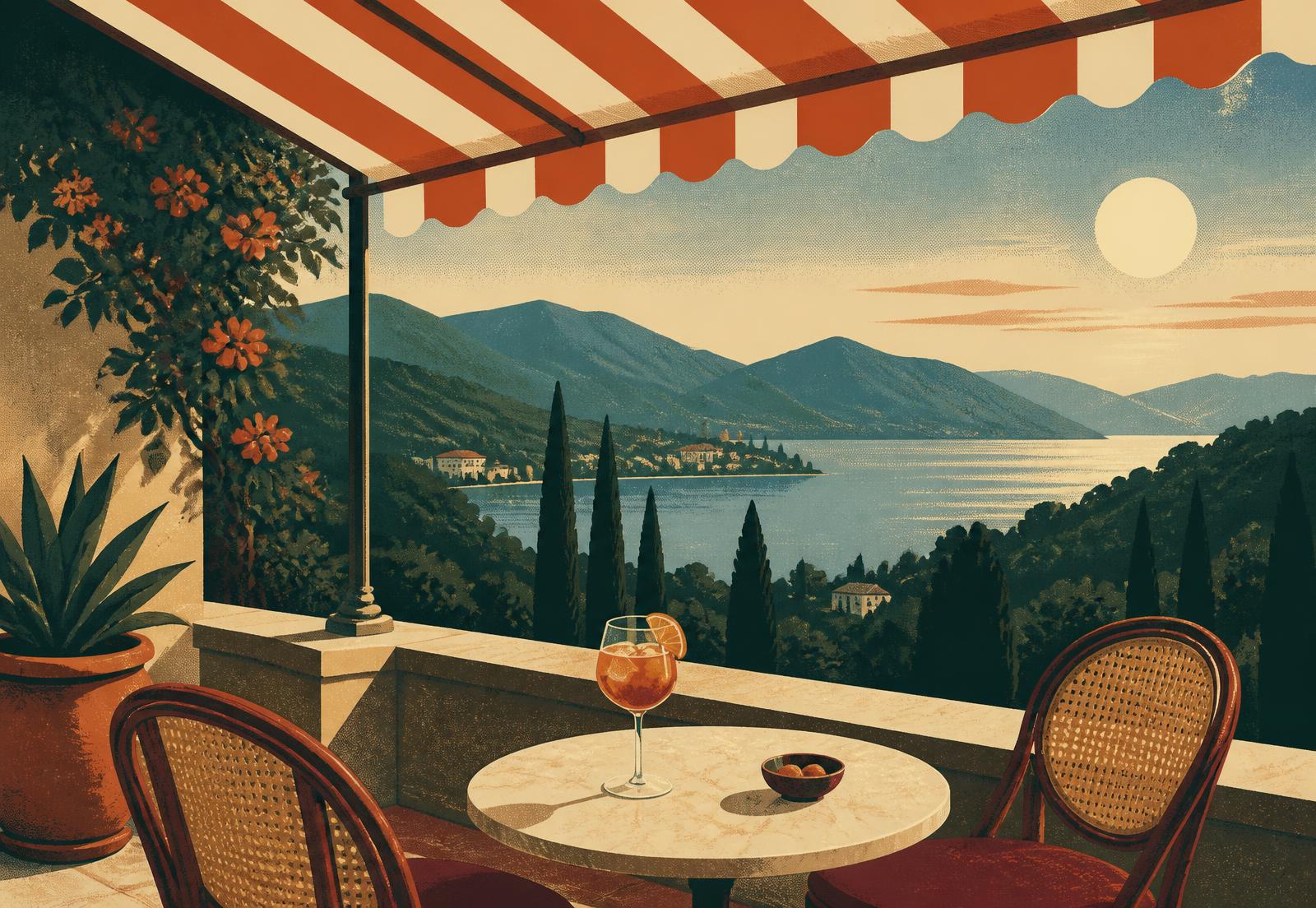
Small number, each season
Caffè Colleoni, roasted in small number and offered to members first, at member prices. Announced in the Bollettino before anywhere else.
Seven members serve on the committee. Six are elected, one is inherited, and all are reluctant. It meets on the first Tuesday of the month, sometimes on the second, and its decision is final though rarely unanimous.
“Everything in small number, and nothing in a hurry.”